
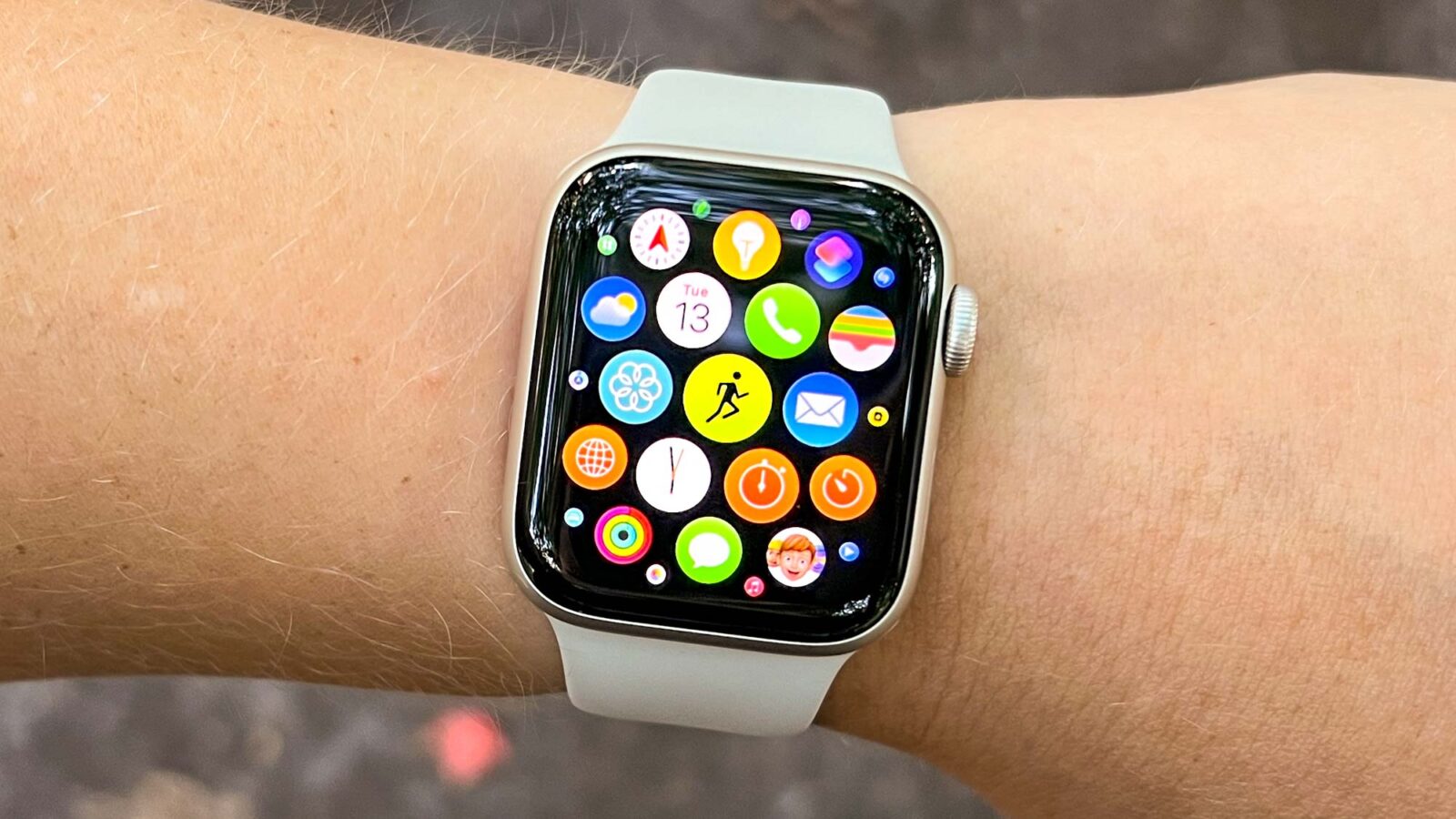
I opened my Apple Watch Series 11 review by noting that people use smartwatches in very different ways — and depending on what you actually need, the best Apple Watch isn’t always the one with the longest feature list.
For years, the Apple Watch SE line has been the go-to pick for parents buying a watch for kids or dependents, as well as for anyone trying a smartwatch for the first time. But with the addition of an always-on display (AOD), on-device Siri, and faster charging, the Apple Watch SE 3 has shed many of its old compromises and now feels like it could be enough for most people. Add an onboard temperature sensor, 5G support, media playback, and gestures like double tap and wrist flick, and the newest Watch SE isn’t just a meaningful upgrade — it’s a genuinely appealing option for almost anyone.
I used the SE 3 for a few weeks to see whether it could replace the Apple Watch Series 11 I normally wear, and aside from a few small caveats, the answer is yes.
Apple’s entry-level smartwatch has improved so much that it delivers an experience that’s surprisingly close to what you get on the pricier models.
Pros
- Strong feature set for the price
Cons
- Charging is still relatively slower
What’s new in the Apple Watch SE 3?
The headline upgrades this time are the always-on display, faster charging, and on-device Siri. That last change let me start workouts, reply to messages, and check the weather without fumbling with tiny onscreen controls. You can also flick your wrist to dismiss notifications and alarms, or use double tap to move through the smart stack and confirm selections.
Older Watch SE models not only needed an iPhone connection for Siri, but also felt slower because requests had to bounce through the phone first. I also hated how long earlier Apple Watches took to charge, and in my testing the SE 3 feels closer to more modern models like the Series 7 and newer. It still takes noticeably longer to recharge than the Series 11, but not so long that it becomes a dealbreaker. You’ll just want a routine that gives the SE 3 a few hours to top back up.
The always-on display is something I missed when I tried the Watch SE 2, because I’m the kind of gym obsessive who wants to glance at my wrist mid-pushup and immediately see my heart rate. Without AOD, you have to lift your wrist or wake the screen, which is annoying when you’re actively working out or holding heavy weights. The SE 3 delivered almost the same experience as the Series 11 during my resistance and HIIT sessions, though the Series 11’s larger screen did make stats easier to read.
As for brightness, the Watch SE 3 hasn’t improved over the SE 2, topping out at the same 1,000 nits. But it can now dim down to 2 nits, which is close to the Series 11’s 1 nit. That sounds like a small thing, but it matters — especially when you accidentally raise your wrist at night or in a dark theater and don’t want your watch to blast your eyes. Older smartwatches could be downright disruptive in cinemas for exactly that reason.
Another display-related update is tougher Ion-X glass, which Apple says is four times more crack-resistant than what was used on the SE 2. I haven’t tested that claim, but it should mean fewer casualties from everyday bumps and drops.
It’s also worth noting that the SE 3 uses the same S10 chip as the Series 11, including a four-core neural engine meant to speed up Siri and Apple Intelligence tasks. In general, I found the SE 3 quick and responsive — and much closer to the Series 11 than previous SE models, which could feel sluggish at times.
Beyond that, how useful the remaining additions are depends heavily on how you use your watch. 5G support matters if you buy the cellular model and want to leave your phone behind. The wrist temperature sensor is mainly there for cycle prediction, so if you don’t ovulate, it likely won’t add much for you right now. Sleep apnea notifications are irrelevant if you don’t need them, though it’s still nice to have the feature available. And while I like being able to play audio through the watch’s speaker, it’s not something I personally do often.
One small downgrade: the SE 3 comes in fewer colors than the SE 2. Your choices are limited to starlight (a warm light gray) or midnight (black). The silver option is gone.
Apple Watch Series 11 vs. Watch SE 3
The big question I wanted to answer was whether the SE 3 can reasonably stand in for the Series 11. For me, it can — but that hinges on your habits. I don’t sleep with a watch on, so the SE 3 still has plenty of battery left in the morning, and its slower charging affects me less. If you wear your Apple Watch nearly 24/7, a faster-charging model like the Series 10 or 11 may be a better fit.
The Series 11’s larger display and slimmer bezels make it nicer to look at, though since both watches run watchOS 26, I could use the same faces. Visually, they don’t feel wildly different in practice, and if you’re not fixated on newer Apple Watch designs, you might not care about the chunkier bezels as much as I did. The SE 3 uses a flat OLED rather than the Series 11’s wide-angle OLED, but I didn’t struggle with readability from different angles.
Because they have electrical heart rate sensors, the Series 11 and Series 10 support more advanced health features like hypertension alerts, as well as ECG and blood oxygen apps. The SE 3 relies on an older optical sensor and doesn’t offer those, but it still provides irregular rhythm notifications, low cardio fitness alerts, and high/low heart rate warnings. That was enough for me, and while I do occasionally run an ECG on my Series 11, it isn’t something I’d miss — especially if I were weighing a $150 price difference.
I’m also not much of a swimmer, so the SE 3’s lack of a depth gauge and water temperature sensor doesn’t bother me. All the watches mentioned here are water resistant to 50 meters, which covers my needs. If you want a watch to support underwater activities, the Series 10 or 11 is the better upgrade.
The higher-end watches are also IP6x certified for dust resistance, which may matter if you work on job sites or beaches. I’ve never personally had a smartwatch fail from dust, so I didn’t miss that rating on the SE 3.
One omission some buyers will care about is the lack of the ultra wideband (UWB) chip found in the Series 10 and 11. UWB enables the more precise Find My feature that helps locate devices down to a specific distance. The SE 3 still supports basic Find My, which — for me — mostly meant ringing my phone so I could confirm it was nearby without digging through my oversized purse. But if you rely on the more precise Find My interface, it’s a real consideration.
And if you’re picky about finishes and colors, the premium lineup still has advantages. The Series 10 and 11 offer more color options in aluminum, and the Series 11 also comes in multiple titanium finishes. The SE 3 sticks with just two colors.
Using the Watch SE 3 as a Series 11 wearer
I’m the type of person who wears a smartwatch when I’m out and takes it off when I’m home. When I’m outside, I want step and activity tracking, automatic detection of longer walks, notification handling, and reliable workout logging. In all of those areas, the SE 3 held up well. Sometimes it was slightly slower than the Series 11 in recognizing when I’d finished a workout and suggesting I end the session, but it wasn’t frequent enough to matter much.
The SE 3 was also just as capable as the Series 11 as a remote viewfinder for my iPhone camera, and Siri felt fast and responsive when starting workouts or checking the weather. I also liked having double tap and wrist flick gestures available — and I didn’t mind the smaller case size.
What I missed most was the Series 11’s brighter screen and thinner bezels. I also prefer the Series 11 because it charges faster and tends to stretch battery life a bit longer. Both watches still lasted a full day for me, but the Series 11 generally did more in the background during that time.
In the end, it wasn’t advanced health features I craved — it was the physical upgrades: brighter display, bigger battery, and a tougher build that offered more peace of mind.
Wrap-up
Is that extra peace of mind worth a $150 premium? In this economy, that’s a tough call. It’s entirely possible that a $399 Apple Watch will last longer than the $249 SE 3 because of its more durable materials, making it a smarter long-term investment. But if you’re on a tighter budget and need a reliable replacement for an aging or broken watch, the SE 3 is the obvious choice.