
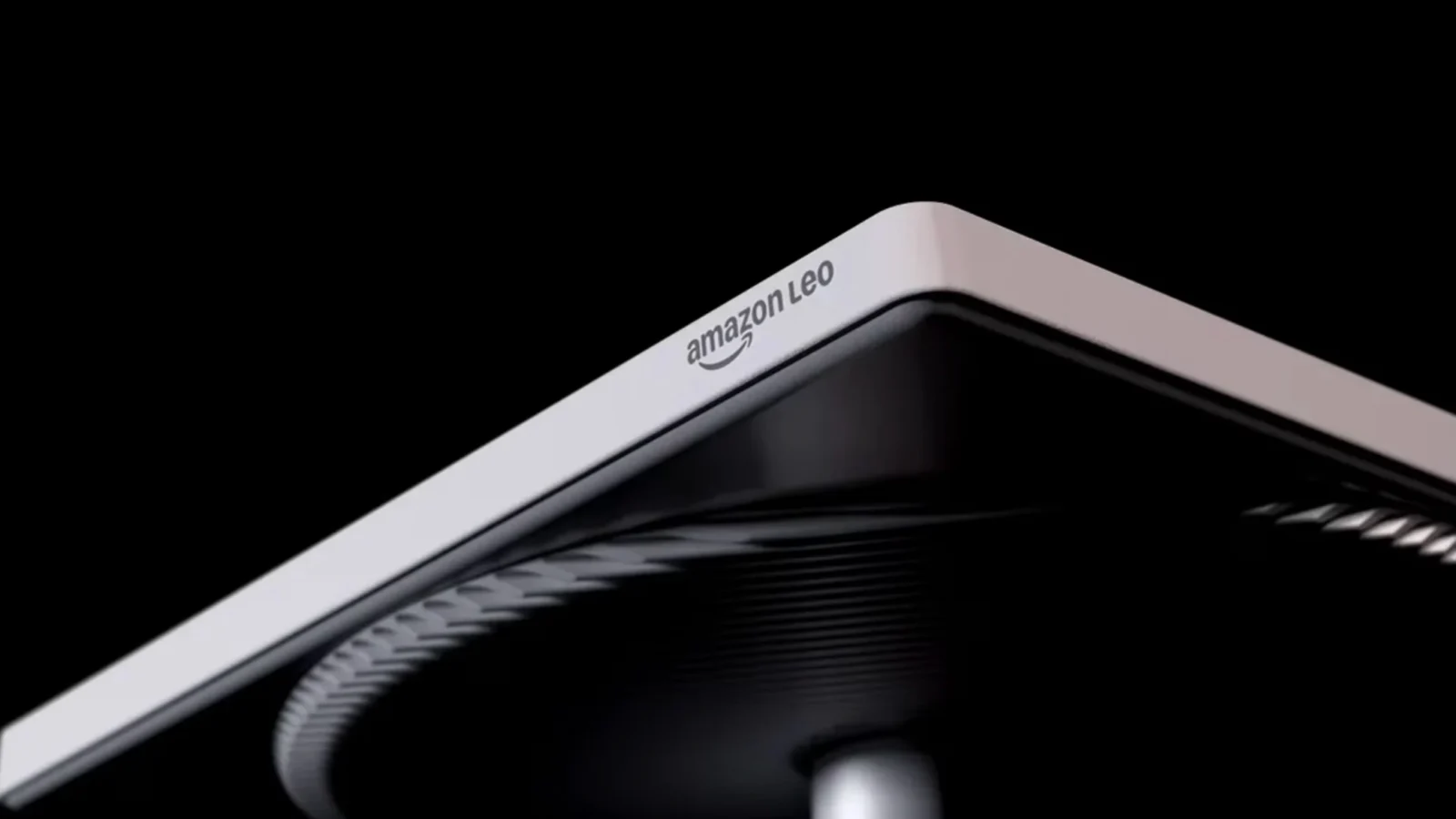
Amazon is taking a step toward formalizing its satellite communications effort with a rebrand. The company has announced that Project Kuiper will now be known as Amazon Leo, a name that reflects the network’s reliance on satellites operating in low Earth orbit.
The path from Project Kuiper to a full-fledged Amazon brand has been a long one. Amazon first unveiled the initiative in 2019, pitching it as a way to deliver internet access to areas lacking reliable connectivity. The plan called for a constellation of more than 3,000 satellites capable of providing high-speed coverage to roughly 95 percent of the world’s population. That vision is still far from complete. In the years since the announcement, Amazon has launched prototype satellites, outlined plans for a space-based laser mesh network, and revealed the customer antennas designed to connect to the system. However, the company didn’t deploy the first 27 operational satellites in the constellation until April 2025.
By contrast, Starlink has moved much more quickly. SpaceX began beta testing its satellite internet service in 2020 and has expanded it aggressively ever since. The company has secured a partnership with T-Mobile to enable satellite-based text messaging and has also worked with airlines to test or provide in-flight internet access. Renaming Project Kuiper as Amazon Leo signals that Amazon may finally be positioning its satellite network as a standalone product, though it still has significant ground to make up.
Amazon has not yet announced when its satellite internet service will be broadly available to consumers or businesses. For now, interested users can sign up on the Amazon Leo website to receive updates as the company continues preparing for launch.