
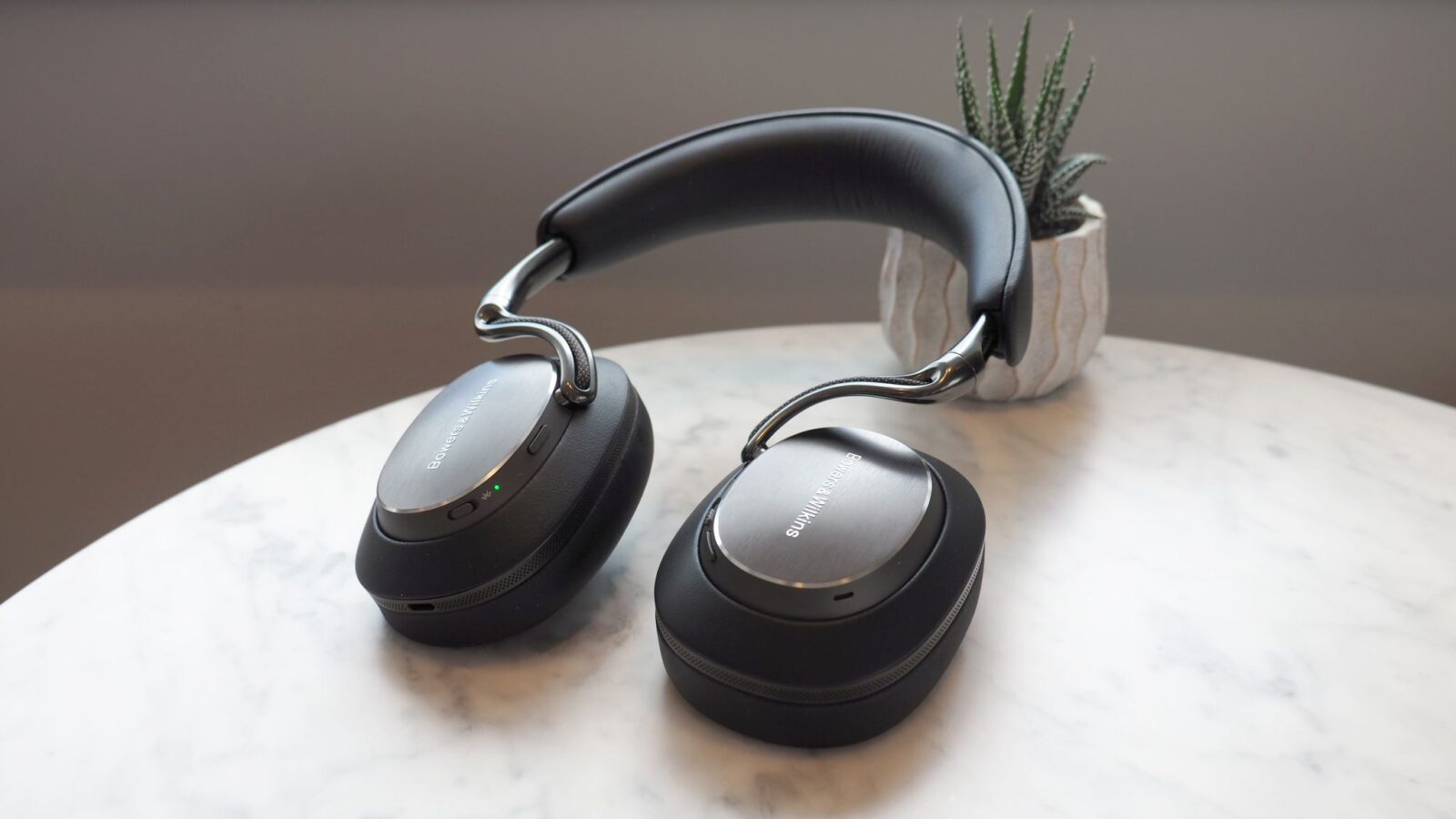
There’s a narrow gap between luxury and excess — and when a pair of headphones costs $799, that boundary starts to feel uncomfortably thin. Bowers & Wilkins has been on a strong streak in recent years, regularly delivering some of the best sound quality available in consumer headphones. The company doesn’t overload its products with features — sometimes to a fault — but it consistently nails the balance between design, audio performance, and solid active noise cancellation (ANC), resulting in headphones that feel thoughtfully refined.
Then there’s the Px8 S2. At $799, it launches $100 higher than the original Px8 did, pushing it even further out of reach for most buyers. Bowers & Wilkins has refreshed the design, made a noticeable leap in audio performance, added high-resolution audio over USB-C, and improved call quality. There’s no question that the Px8 S2 sits firmly in the ultra-premium tier — but the real question is whether it crosses the line.
Bowers & Wilkins Px8 S2
The Px8 S2 delivers sumptuous sound and refined design, but demands an exceptionally high price for the privilege.
Pros
- Outstanding sound quality
- Luxurious materials and design
- High-resolution audio support
Cons
- Extremely expensive
- Bass overwhelms certain genres
- Sparse feature set
- Buttons are small and awkwardly placed
What’s new on the Px8 S2?
After several Px7 and Px8 generations that shared nearly identical designs, Bowers & Wilkins has made subtle visual changes with the Px8 S2. This isn’t a full redesign, but the slimmer ear cups and exposed cabling on the headband yokes give the headphones a fresher, more refined look. Once again, the company relies on soft leather and die-cast aluminum, reinforcing the Px8 S2’s unmistakably premium feel.
Internally, new 40mm carbon cone dynamic drivers have been reworked with an updated chassis and motor. These are paired with 24-bit digital signal processing, a dedicated amplifier, and an integrated DAC. The EQ has also been upgraded to a more capable five-band system with a True Sound bypass, allowing you to instantly revert to Bowers & Wilkins’ default tuning. aptX Lossless has been added alongside aptX Adaptive, and true lossless 24-bit/96kHz playback is available over USB-C.
Microphone count has increased as well, with eight total mics now onboard — up from six previously. Six handle ANC by monitoring external noise, two manage internal feedback, and all eight are used during calls. An improved “pure voice” algorithm further enhances call clarity, and transparency mode now makes your own voice easier to hear, which is especially helpful during conversations.
What’s still good on the Px8 S2?
Bowers & Wilkins continues to excel at delivering a warm, immersive sound signature, and the Px8 S2 is no exception. Audio is rich, detailed, and expansive, with a soundstage that feels enveloping — sometimes almost overwhelming. While the bass tuning isn’t ideal for every genre, there’s still a lot to admire. On albums like Foxes in the Snow by Jason Isbell, the detail and texture in sparse arrangements — just voice and acoustic guitar — are stunning, revealing subtle nuances with impressive clarity.
Battery life remains a strong point. With ANC enabled, the Px8 S2 is rated for 30 hours, matching its predecessor. In real-world use, that figure held up easily. Even with a mix of noise cancellation, high-resolution audio, and transparency mode for calls, the headphones consistently met Bowers & Wilkins’ claims.
What’s not so good about the Px8 S2?
The most obvious drawback is the price. At $799, the Px8 S2 sits well above the roughly $500 ceiling where most flagship headphones land today. While that figure is only about $50 more than the inflation-adjusted launch price of the original Px8, it’s still a steep ask — one that will rule these out for many potential buyers and make them difficult to recommend, despite their strengths.
Bass tuning is another concern. Even with the improved drivers, Bowers & Wilkins may have pushed the low end too far. For bass-heavy genres like rock, metal, EDM, and hip-hop, the low frequencies can be overpowering. On tracks like Spiritbox’s “Perfect Soul,” the kick drum comes dangerously close to drowning out guitars. A more restrained approach would still deliver impact without becoming fatiguing. On quieter material, such as Ruston Kelly’s Pale, Through the Window, the bass can feel excessive for the style.
Control design is also an issue. As with recent Bowers & Wilkins models, the physical buttons have been moved to a ridge on the ear cups — and made noticeably smaller. This makes them harder to locate by feel and requires more precise presses, particularly the three-button cluster on the right ear cup that controls volume and playback.
Finally, the feature set remains relatively barebones. You get essentials like multipoint Bluetooth and wear detection, but that’s about it. Advanced features such as voice-assistant integration, speech detection, or adaptive sound modes are absent. Competitors like Sony, Bose, and Sennheiser offer far more functionality — even if the Px8 S2 often beats them on pure sound quality.
Wrap-up
So where does the Px8 S2 land on that fine line between luxury and excess? It’s undoubtedly a luxurious pair of headphones — paired with a price that borders on the absurd. Bowers & Wilkins is a high-end audio brand, and premium pricing is part of its identity. But even acknowledging that, $799 is a difficult figure to justify when competitors offer broader feature sets for hundreds less. The Px8 S2 sounds exceptional and looks stunning, but its asking price makes it a product for a very narrow audience — one that values sound quality and craftsmanship above everything else.