
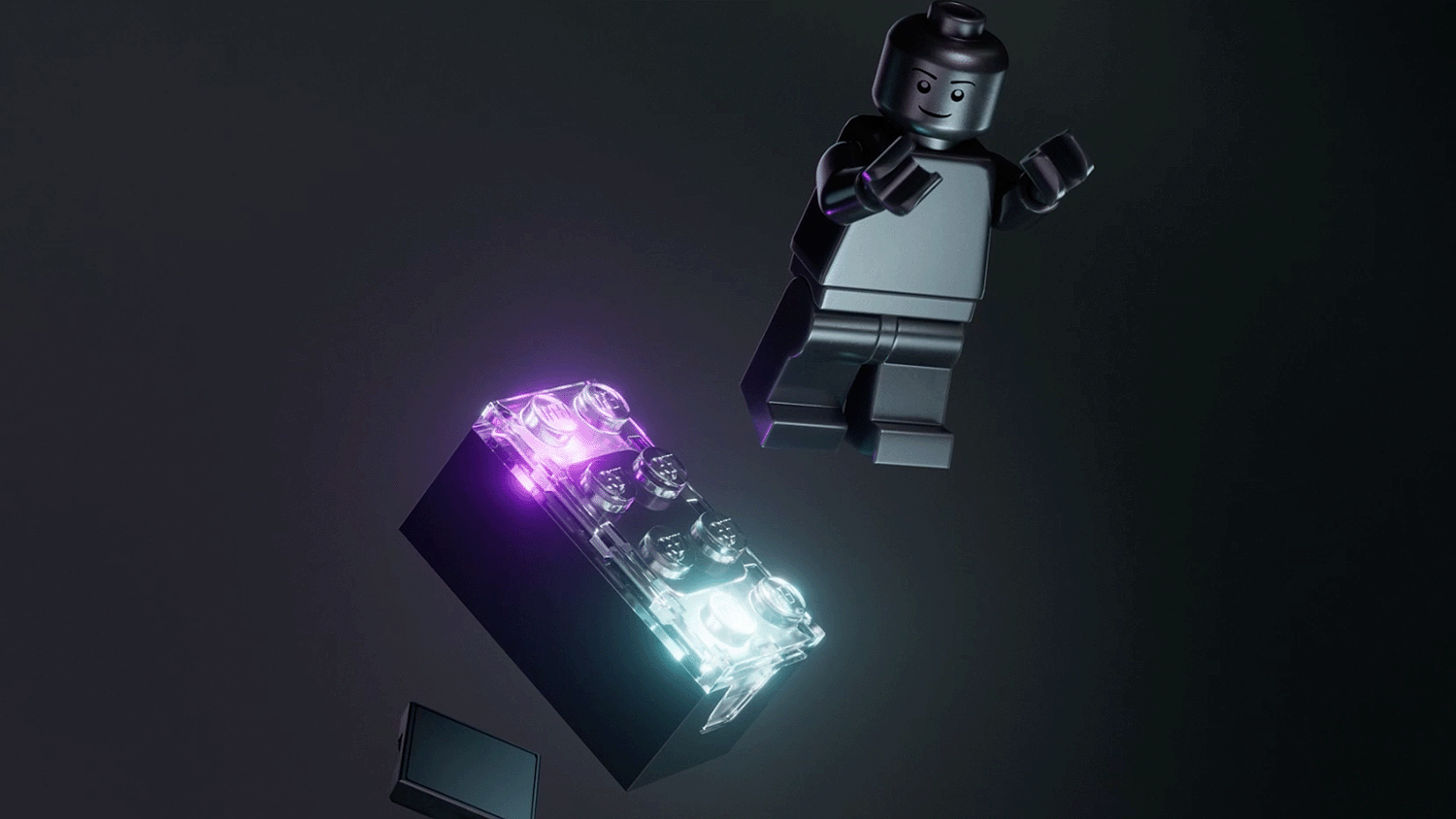
LEGO bricks may look simple, but they’re getting a major technological upgrade in 2026, according to announcements made at CES this year. Enter the LEGO Smart Brick: a standard 2 × 4 brick packed with modern tech that allows sets to react to how they’re built and played with. This new effort falls under LEGO’s Smart Play initiative, which also includes Smart Minifigures and Smart Tags. It’s unclear how longtime LEGO fans will feel about the change, but there’s no question this is the company’s boldest step yet toward connected, interactive play.
At the core of the Smart Brick is a 4.1mm ASIC chip — smaller than a traditional LEGO stud — running what LEGO calls the Play Engine. It can detect motion, orientation, and magnetic fields. Combined with integrated copper coils, the brick can sense the distance, direction, and alignment of nearby Smart Bricks during construction. It also includes a tiny speaker, an accelerometer, and an LED array. According to LEGO, the speaker generates sound that reacts dynamically to play actions, rather than simply triggering prerecorded audio.
Smart Tags and Smart Minifigures are more straightforward. The Smart Tag is a studless 2 × 2 tile that contains a digital ID, which the Smart Brick can read using what LEGO calls “near-field magnetic communication.” While this sounds similar to NFC, it’s not yet clear whether these pieces will interact with standard NFC devices. Smart Minifigures also carry a digital ID that can be read in a similar way.
The purpose of these IDs is to provide context. As LEGO explains it, the Smart Tag tells the Smart Brick how it should behave during play. A tag defines whether the brick represents an object, animal, vehicle, or something else. In a LEGO Star Wars X-Wing set, for instance, a Smart Tag would include a unique ID and instructions that dictate how the Smart Brick should respond.
To tie everything together, LEGO has developed a local wireless system called BrickNet. Built on Bluetooth and powered by LEGO’s proprietary “Neighbor Position Measurement” technology, BrickNet allows Smart Bricks to understand how close they are to one another and how they’re oriented. This setup enables the bricks to communicate directly, without apps, internet access, or external controllers. The goal is to keep the experience as close as possible to traditional LEGO play, with no complicated setup.
Of course, all this technology needs power. LEGO says the batteries are designed to retain charge even after years of inactivity, and the charging system allows multiple bricks to be wirelessly recharged together on a shared charging pad.
LEGO is launching Smart Play with its largest licensed franchise: Star Wars. Three all-in-one Star Wars sets will debut first. They’re relatively small and clearly aimed at kids, rather than adult-focused builds with thousands of pieces.
Pricing is higher than comparable non-smart sets, though not wildly so. Darth Vader’s TIE Fighter includes 473 pieces, a smart Darth Vader Minifigure, one Smart Brick, and one Smart Tag, priced at $70. Luke’s Red Five X-Wing comes with 584 pieces, two Smart Minifigures, one Smart Brick, and five Smart Tags for $100. The Throne Room Duel & A-Wing set is the largest at 962 pieces, including three Smart Minifigures, two Smart Bricks, and five Smart Tags, and costs $160.
This marks a major shift for LEGO, and it won’t be long before consumers can try it themselves. Preorders for all three sets open January 9, with a full release on March 1. With so much new technology involved, it’s difficult to predict how everything will come together in practice — but hopefully LEGO will have hands-on demos at CES to show exactly how the Smart Play system works.