
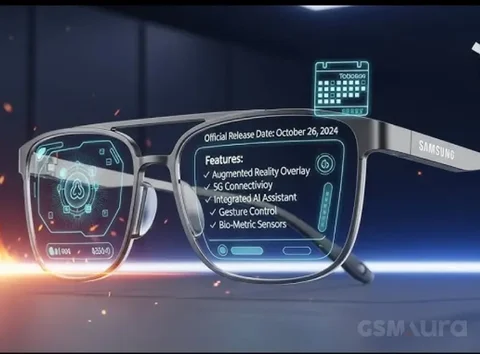
By 2026, smart glasses are no longer experimental gadgets or niche enterprise tools. They are becoming a mainstream computing layer that changes how people interact with information, environments, and even each other.
Instead of looking down at screens, users increasingly receive digital information directly in their field of view — embedded into reality itself. Navigation appears on streets, translations float above conversations, and contextual data follows objects in real time.
What started as awkward prototypes has evolved into a new category of “ambient computing.” The key idea is simple: the device disappears, but intelligence stays.
From Failed Prototypes to Mass Adoption
The concept of wearable augmented reality has existed for decades, but early attempts struggled with usability, design, and social acceptance.
Devices like early enterprise AR headsets were powerful but bulky. Consumer experiments often felt intrusive or socially uncomfortable. The real breakthrough came when companies shifted focus away from “showing technology” and toward “blending into everyday life.”
Instead of asking how much data a device could display, designers started asking a more important question: how little should the user notice the device at all?
This design philosophy led to lighter frames, natural-looking eyewear, and AI systems that operate quietly in the background instead of demanding attention.
By the mid-2020s, advances in on-device AI chips and multimodal models made it possible for glasses to understand speech, recognize objects, and interpret environments without constant cloud dependency.
That shift marked the beginning of practical smart glasses adoption.
What Smart Glasses Actually Do in 2026
Modern smart glasses are no longer just displays. They function as real-time perception systems.
They can:
Interpret speech and translate conversations instantly
Recognize objects, signs, and text in the environment
Provide navigation directly over physical space
Summarize what the user is seeing or hearing
Deliver contextual notifications without interrupting focus
The key difference compared to smartphones is timing. Information is no longer pulled by the user — it is pushed based on context.
Instead of unlocking a device, opening an app, and searching, the system already knows what is relevant based on where the user is and what they are doing.
This makes interaction continuous rather than segmented.
The Core Technologies Behind the Shift
Three major technological breakthroughs define modern smart glasses:
First, on-device AI processing. Instead of relying heavily on cloud servers, many systems now run language and vision models locally, improving speed and privacy.
Second, spatial computing. Devices can understand depth, distance, and positioning, allowing digital elements to remain stable in the physical world.
Third, multimodal AI integration. Systems can combine audio, visual, and contextual data simultaneously, creating a unified understanding of the user’s environment.
Together, these capabilities allow glasses to act less like screens and more like situational intelligence systems.
Real-World Use Cases Driving Adoption
In 2026, adoption is no longer driven by novelty but by utility.
In professional environments, technicians use smart glasses to overlay instructions directly onto machinery, reducing errors and training time. Logistics workers rely on them for hands-free scanning and navigation through warehouses.
In healthcare settings, real-time transcription and translation support communication between medical staff and patients who speak different languages.
For everyday users, navigation assistance, live translation, and object recognition are becoming standard features. Tourists can understand signs instantly, while commuters receive route guidance without checking a phone.
Accessibility is also a major driver. Users with visual or hearing impairments benefit from audio descriptions, live captions, and environmental interpretation features that make navigation more independent.
Why Smart Glasses Matter Beyond Convenience
The impact of smart glasses goes far beyond productivity improvements.
One major shift is cognitive offloading. Instead of remembering routes, schedules, or details, users rely on contextual prompts that appear exactly when needed. This reduces mental load and decision fatigue.
Another shift is accessibility. Real-time interpretation of the environment creates new levels of independence for people who previously relied on assistance.
There is also a communication impact. Language barriers become less significant when translation happens instantly during conversations.
At a deeper level, smart glasses change how attention works. Instead of switching between tasks and apps, information flows into the user’s natural field of awareness.
The result is a more continuous relationship between humans and digital systems.
The New Risks: Privacy, Dependence, and Information Overload
As with any deeply integrated technology, smart glasses introduce new challenges.
Privacy is the most significant concern. Devices that continuously interpret visual environments raise questions about data capture, storage, and consent. Regulations in multiple regions are now pushing for clear recording indicators and local data processing requirements.
There is also the risk of over-dependence. When translation, navigation, and memory support are always available, users may gradually rely less on personal recall and situational awareness.
Another challenge is information filtering. If too much contextual data is displayed, users risk cognitive overload in the opposite direction — where augmented reality becomes distracting rather than helpful.
The balance between assistance and intrusion is still being defined.
The Industry Shift: From Devices to Platforms
The smart glasses market in 2026 is no longer about hardware alone. It is about ecosystems.
Major tech companies are building platforms that allow developers to create contextual applications that run directly in augmented environments. These include navigation layers, retail experiences, productivity tools, and accessibility services.
Retail and logistics sectors are leading early adoption, but consumer applications are growing quickly as prices decrease and designs become more natural.
The competition is no longer about who builds the best glasses — it is about who defines the most useful augmented reality ecosystem.
Five Trends Shaping Smart Glasses Through 2026–2028
1. Predictive Context Awareness
Future devices will anticipate user needs before explicit input, such as showing travel updates before a commute begins or translating speech before a conversation is fully recognized.
2. Seamless Prescription Integration
Smart features will increasingly be built directly into prescription lenses, removing the need for separate devices or attachments.
3. Gesture and Eye-Based Interaction
Control will shift away from voice and touch toward subtle gestures, gaze tracking, and micro-interactions.
4. Real-World Commerce Integration
Physical objects will become interactive points of purchase, allowing users to identify and buy products instantly through visual recognition.
5. Strict Privacy-by-Design Standards
Regulation will force transparency in recording, data processing, and AI decision-making, shaping how devices can operate in public spaces.
Enterprise Adoption Leads the Transition
As with many emerging technologies, businesses are driving early adoption.
Warehouses, manufacturing plants, and field service industries use smart glasses to reduce errors, speed up training, and improve operational efficiency. These environments benefit immediately from hands-free information access.
Consumer adoption follows more slowly but steadily, often as enterprise-driven innovation lowers cost and improves usability.
This pattern suggests that smart glasses will first become invisible infrastructure at work before becoming everyday personal devices.
Conclusion: Computing That Disappears Into Reality
Smart glasses represent a fundamental shift in computing philosophy. The goal is no longer to interact with devices but to let intelligence integrate directly into perception.
Instead of opening apps, users experience information as part of their environment. The screen becomes optional. The interface becomes reality itself.
By 2026, the question is no longer whether smart glasses will succeed. The real question is how quickly society will adapt to a world where digital information is always present, always contextual, and always watching — quietly shaping how people see and understand everything around them.