
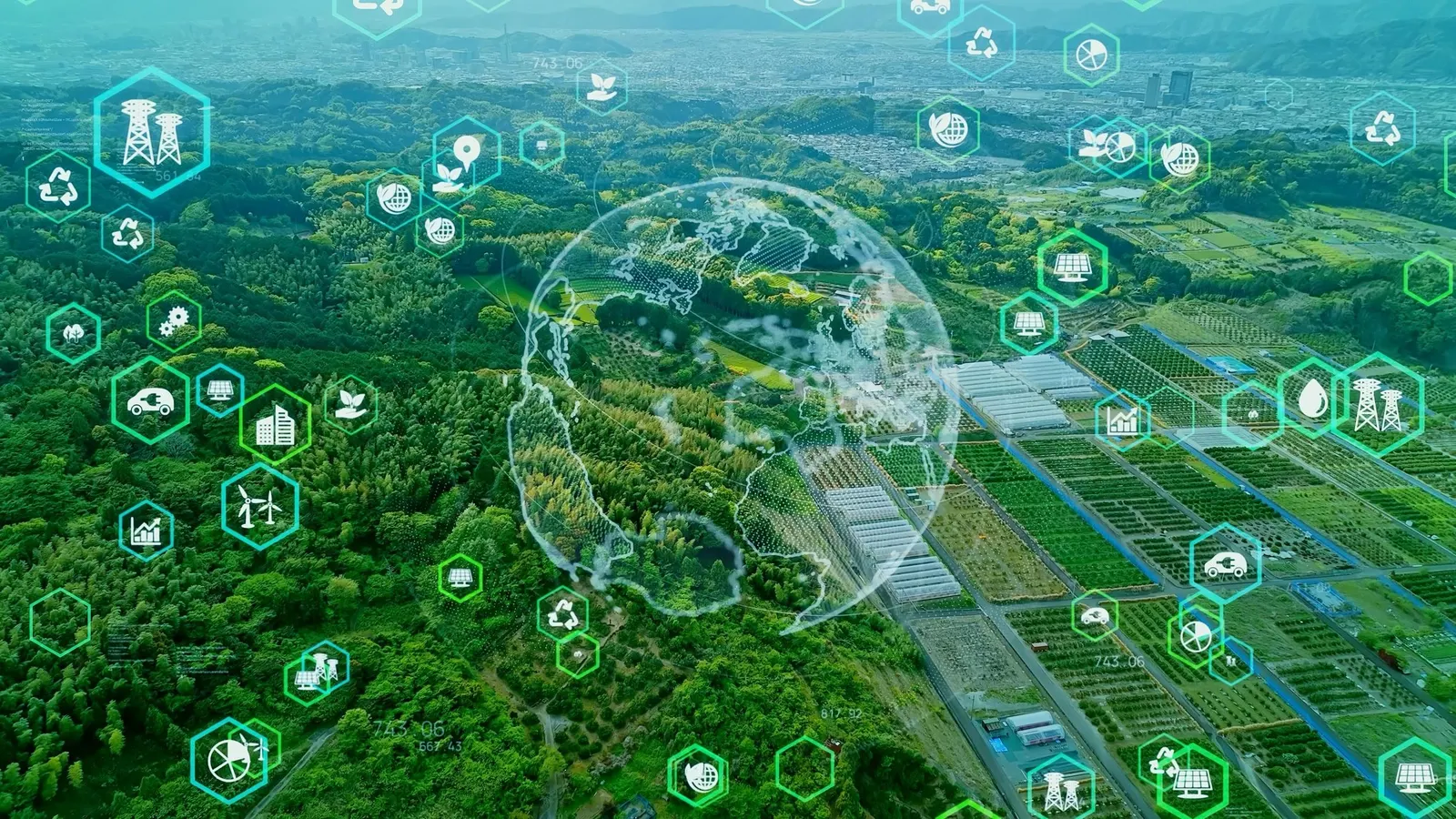
By 2026, artificial intelligence has become one of the most powerful tools in climate science. Not because it replaces existing climate models, but because it extends them into something far more complex: dynamic simulations of global systems that include weather, economics, migration, agriculture, infrastructure, and human behavior.
Traditional climate models focused mainly on physical variables such as temperature, CO₂ levels, and ocean currents. Modern AI systems go further. They attempt to simulate the chain reactions that occur when environmental stress interacts with political systems, supply chains, and population movement.
The result is a new scientific frontier: predictive collapse modeling.
From Linear Climate Models to System-Wide Simulation
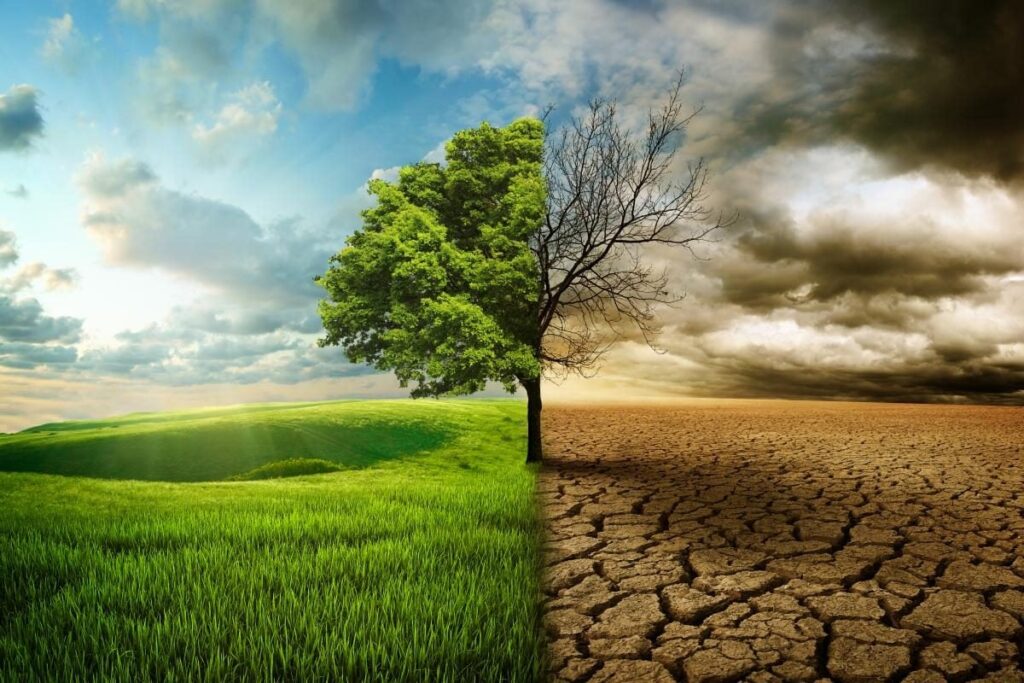
Early climate forecasting was built on relatively linear assumptions. Scientists could estimate temperature rise, ice melt rates, and sea level changes based on emissions scenarios. However, these models struggled to account for nonlinear effects — tipping points where small environmental changes trigger large systemic disruptions.
AI changed this approach by introducing multi-layer simulation. Instead of modeling climate in isolation, modern systems integrate environmental data with global economic flows, agricultural outputs, energy consumption, and migration patterns.
This allows researchers to ask a different kind of question. Not simply “How much will the Earth warm?” but “What happens when multiple systems fail simultaneously?”
The answer is no longer a single forecast. It is a branching map of potential global disruptions.
How AI Detects Cascading Climate Failures
One of the most significant advances in 2026 climate AI is cascade modeling. These systems are designed to simulate how one environmental shock can trigger a chain reaction across multiple regions and sectors.
For example, a drought in one agricultural region may reduce global grain supply. That shift can increase food prices, which in turn affects political stability in import-dependent countries. This may lead to migration pressure, which then impacts labor markets and infrastructure in receiving regions.
AI systems can now simulate these interconnected effects at scale, running thousands of scenario variations in parallel. Instead of predicting a single outcome, they generate probability distributions of potential global futures.
This allows researchers to identify “fragile nodes” in the global system — points where instability is most likely to spread.
Integration of Real-Time Global Data
What makes 2026 climate AI particularly powerful is its access to real-time, multi-source data streams.
Modern systems ingest satellite imagery, ocean sensor readings, agricultural yield reports, shipping logistics data, financial markets, and even aggregated social signals. This continuous flow of information allows models to update their predictions dynamically rather than relying on static annual reports.
For example, changes in soil moisture detected by satellites can be linked directly to projected crop yields. At the same time, trade data can indicate how shortages might affect global pricing within weeks.
This level of integration creates a constantly updating simulation of planetary systems, where predictions evolve as conditions change.
Early Warning Systems and Policy Response Models
By 2026, several governments and international institutions are actively using AI-driven early warning systems for climate risk detection.
These systems are not designed only to forecast long-term changes but to identify near-term instability. For instance, sudden shifts in rainfall patterns combined with supply chain disruptions can trigger alerts for potential food insecurity events.
Some models also simulate policy interventions. They test how different responses — such as export restrictions, subsidies, or emergency resource distribution — might influence outcomes. This allows policymakers to evaluate consequences before decisions are implemented in the real world.
However, these systems do not provide certainty. They provide probabilities and scenario ranges, which still require human interpretation and judgment.
Economic and Social Dimensions of Climate Modeling
One of the most important shifts in 2026 is the recognition that climate change is not only an environmental issue, but a deeply interconnected economic and social system problem.
AI models now simulate the relationship between climate stress and global markets. For example, reduced agricultural output in one region can affect commodity pricing globally within days. Similarly, heatwaves can influence labor productivity, energy demand, and healthcare systems simultaneously.
Migration modeling has also become a critical component. AI systems attempt to estimate population movement under different climate stress scenarios, helping governments understand potential pressure on urban infrastructure, housing, and public services.
These simulations are increasingly used in financial risk assessment, infrastructure planning, and insurance modeling.
The Rise of Climate Risk Interconnection Mapping
A major innovation in 2026 is the development of global interconnection maps. These systems visualize how disruptions in one region can propagate across the planet through economic, environmental, and logistical links.
For example, a disruption in agricultural production in South Asia might affect grain exports, which then impacts food prices in North Africa, which could in turn influence political stability in import-dependent regions.
These cascading pathways are not obvious in traditional models, but AI systems can identify them by analyzing vast datasets across multiple domains simultaneously.
This has changed how policymakers and researchers think about climate risk. Instead of isolated events, they now consider systemic vulnerability.
Geoengineering Simulation and Future Intervention Planning
As climate risks become more complex, AI is also being used to simulate potential intervention strategies. These include large-scale environmental engineering concepts such as carbon capture technologies, solar radiation management, and reforestation optimization.
In 2026, these simulations are not used as direct policy prescriptions, but as exploratory tools. They help researchers evaluate possible outcomes, unintended consequences, and long-term risks associated with intervention strategies.
The key challenge is uncertainty. Even the most advanced models cannot fully predict how Earth systems will respond to large-scale human intervention. AI helps narrow possibilities, but it does not eliminate risk.
The Central Challenge: Trust, Control, and Interpretation
As AI systems become more influential in climate forecasting, a critical question emerges: who controls the models, and how are their outputs interpreted?
These systems are complex, often trained on proprietary datasets and governed by institutions with varying levels of transparency. This creates a gap between model outputs and public understanding.
Another challenge is overreliance. While AI can identify patterns and simulate scenarios, it does not replace human decision-making. Policy responses still depend on political will, economic constraints, and social priorities.
There is also the risk of misinterpretation. A high-probability scenario is not a guaranteed future, but it can influence decisions in ways that reshape the very outcomes it predicts.
Emerging Trends in AI-Driven Climate Science
Several key developments are shaping the next phase of AI climate modeling.
One is the expansion of automated early warning systems that can trigger rapid policy responses when certain risk thresholds are detected. Another is the integration of climate simulations into urban planning, where cities are redesigned based on long-term environmental stress testing.
There is also growing interest in decentralized climate monitoring, where local communities access AI tools to simulate regional risks independently of central authorities.
Finally, AI-driven scenario modeling is increasingly being used in finance and insurance to evaluate long-term environmental risk exposure.
Conclusion: From Prediction to System Awareness
By 2026, AI has transformed climate science from a field focused on prediction into one focused on system-wide awareness. These models do not simply forecast temperature changes or weather events. They map interconnected global risks that span environmental, economic, and social systems.
The value of these systems lies in their ability to reveal complexity that would otherwise remain hidden. They show how small environmental changes can cascade into large-scale global disruptions.
However, their insights also raise difficult questions about interpretation, responsibility, and action. Knowing what might happen is not the same as being able to prevent it.
The defining challenge of this era is not whether AI can model climate collapse, but whether societies can respond effectively to what these models reveal.