In 2026, the AI coding ecosystem is entering a phase of rapid consolidation. Tools that once operated separately—code generation, debugging, review, and deployment—are being merged into unified development systems. One of the most significant moves in this direction is Cursor’s acquisition of Graphite, a startup specializing in AI-assisted code review and debugging.
While the financial details remain undisclosed, market estimates suggest the deal significantly exceeded Graphite’s previous valuation of around $290 million, reflecting growing demand for end-to-end AI development workflows.
This acquisition is not just a corporate expansion. It signals a deeper shift in how software is being built, reviewed, and shipped.
From AI Coding Assistants to Full Development Systems
Cursor originally gained traction as an AI-powered coding assistant designed to help developers write code faster, generate functions, and understand complex codebases through natural language interaction.
However, writing code is only one part of modern software engineering. The larger bottleneck has always been validation—finding bugs, reviewing pull requests, and ensuring that multiple developers working in parallel do not create conflicting changes.
Graphite addresses this exact problem.
Its core innovation, known as “stacked pull requests,” allows developers to structure dependent code changes in a layered sequence rather than a single monolithic update. This makes complex development workflows more manageable, especially in large engineering teams.
By acquiring Graphite, Cursor is effectively expanding from a code generation tool into a full development lifecycle platform.
Why Code Review Became the Next AI Frontier
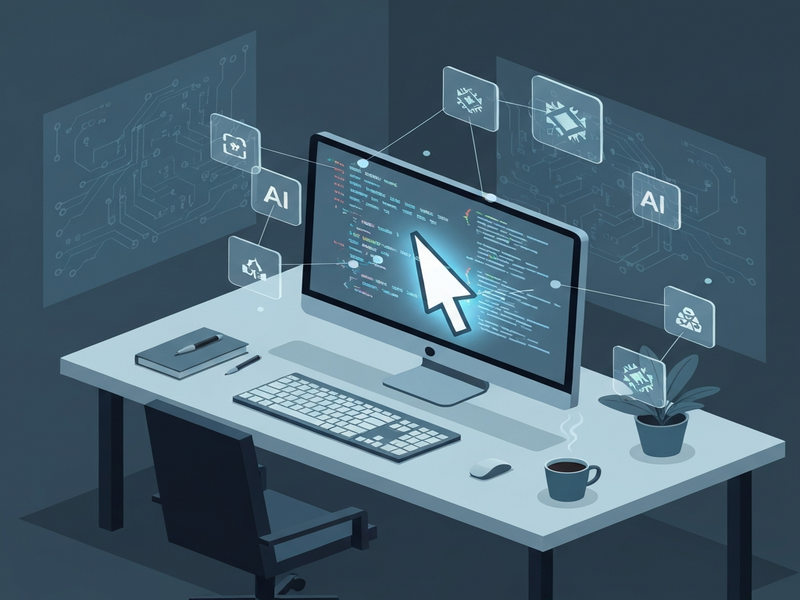
AI-generated code has dramatically increased development speed, but it has also introduced a new challenge: volume of errors.
As AI systems produce more code faster than human engineers traditionally would, the review process becomes a bottleneck. Bugs, inefficiencies, and architectural inconsistencies accumulate unless they are caught early.
This is where AI-powered code review tools like Graphite, CodeRabbit, and Greptile have gained importance.
Instead of simply generating code, these systems analyze it in context—detecting logical errors, performance issues, and structural inconsistencies before the code is merged.
In 2026, software engineering is no longer about writing code alone. It is about managing AI-generated output at scale.
The Strategic Logic Behind the Acquisition
The combination of Cursor and Graphite creates a closed-loop development system.
Cursor generates code.
Graphite reviews it.
The system iterates continuously.
This removes the traditional separation between writing and reviewing software. Instead of developers switching between tools and waiting for manual approvals, the entire workflow becomes continuous and partially automated.
The strategic advantage is speed. Companies using integrated AI development stacks can move from idea to production significantly faster than teams relying on fragmented toolchains.
In a competitive software market, speed is not just efficiency—it is survival.
The Rise of “AI Dev Stacks”
The Cursor–Graphite deal reflects a broader trend in 2026: the emergence of full AI development stacks.
Instead of using isolated tools for coding, testing, and deployment, companies are increasingly adopting integrated ecosystems where each layer of the software pipeline is AI-enhanced.
A typical AI dev stack now includes:
AI code generation tools that translate natural language into working software
AI review systems that detect bugs and enforce best practices
AI testing systems that simulate user behavior
AI deployment systems that optimize performance in real time
These systems do not operate independently. They communicate continuously, creating a feedback loop that improves both code quality and delivery speed.
How Stacked Pull Requests Changed Collaboration
One of Graphite’s most important innovations—stacked pull requests—solves a long-standing problem in software engineering: dependency chaos.
In traditional workflows, developers often wait for one change to be approved before building on top of it. This slows down teams and creates bottlenecks, especially in large projects.
Stacked pull requests allow multiple dependent changes to exist simultaneously in a structured hierarchy. Each layer builds on the previous one, while still remaining independently reviewable.
This approach aligns naturally with AI-assisted development, where multiple iterations of code can be generated, tested, and refined in parallel.
In 2026, this model is becoming standard practice in high-performance engineering teams.
Competition in the AI Code Review Market
The acquisition also highlights intensifying competition in the AI code review space.
Startups like CodeRabbit and Greptile are building specialized systems focused exclusively on analyzing and improving AI-generated code. These tools are gaining traction because they address a critical gap: ensuring that rapid AI-generated development remains reliable and production-ready.
Investors are increasingly valuing these companies highly, recognizing that code review may become as important as code generation itself.
The logic is simple: the faster code is produced, the more important it becomes to verify it instantly.
The Investor and Ecosystem Web Behind the Deal
Cursor and Graphite share overlapping investor networks, including major venture firms such as Accel and Andreessen Horowitz. This shared backing reflects a broader ecosystem strategy: consolidating complementary tools within the same innovation pipeline.
The founders of both companies also come from interconnected talent networks in the Silicon Valley AI ecosystem, including elite early-stage programs focused on technical founders.
This interconnectedness is not accidental. In 2026, AI infrastructure companies are increasingly built within tightly linked investor and talent circles that accelerate consolidation.
Why This Acquisition Matters for Developers
For software engineers, the Cursor–Graphite integration represents a major shift in workflow expectations.
Instead of manually writing, reviewing, and debugging code across separate tools, developers are moving toward environments where:
Code is generated in context
Bugs are detected instantly
Changes are structured automatically
And review cycles happen continuously in the background
This reduces the need for repetitive manual oversight and shifts developer focus toward system design and problem-solving.
However, it also raises a new question: what does “engineering skill” mean in a world where AI handles most of the implementation details?
Risks and Open Questions
Despite the efficiency gains, this level of automation introduces new risks.
One concern is over-reliance on AI-generated review systems. If both code creation and validation are handled by interconnected AI models, there is a risk of systemic blind spots where errors propagate unnoticed.
Another issue is standardization. As more companies adopt unified AI development stacks, software diversity may decrease, leading to homogenized coding patterns and architectural decisions.
Finally, there is the question of control. As AI systems become responsible for both generating and approving code, human oversight becomes less direct, raising questions about accountability in production environments.
The Bigger Picture: Software Engineering in 2026
The Cursor–Graphite acquisition is not an isolated event. It is part of a larger transformation in how software is built.
We are moving from:
Manual coding → AI-assisted coding
Separate tools → unified AI development systems
Human review cycles → continuous AI validation
Linear workflows → parallel, stacked development processes
In this environment, the role of developers evolves from writing every line of code to orchestrating systems that generate and refine code autonomously.
Final Takeaway
Cursor’s acquisition of Graphite represents more than business expansion—it reflects a structural shift in software engineering.
AI is no longer just helping developers write code faster. It is beginning to control the entire lifecycle of software creation, from generation to review to deployment.
The result is a new kind of development ecosystem: faster, more automated, and increasingly interconnected.
The key question moving forward is not whether AI will write software.
It already does.
The real question is how much of the software pipeline humans will continue to directly control—and how much will operate as an autonomous system beneath them.