
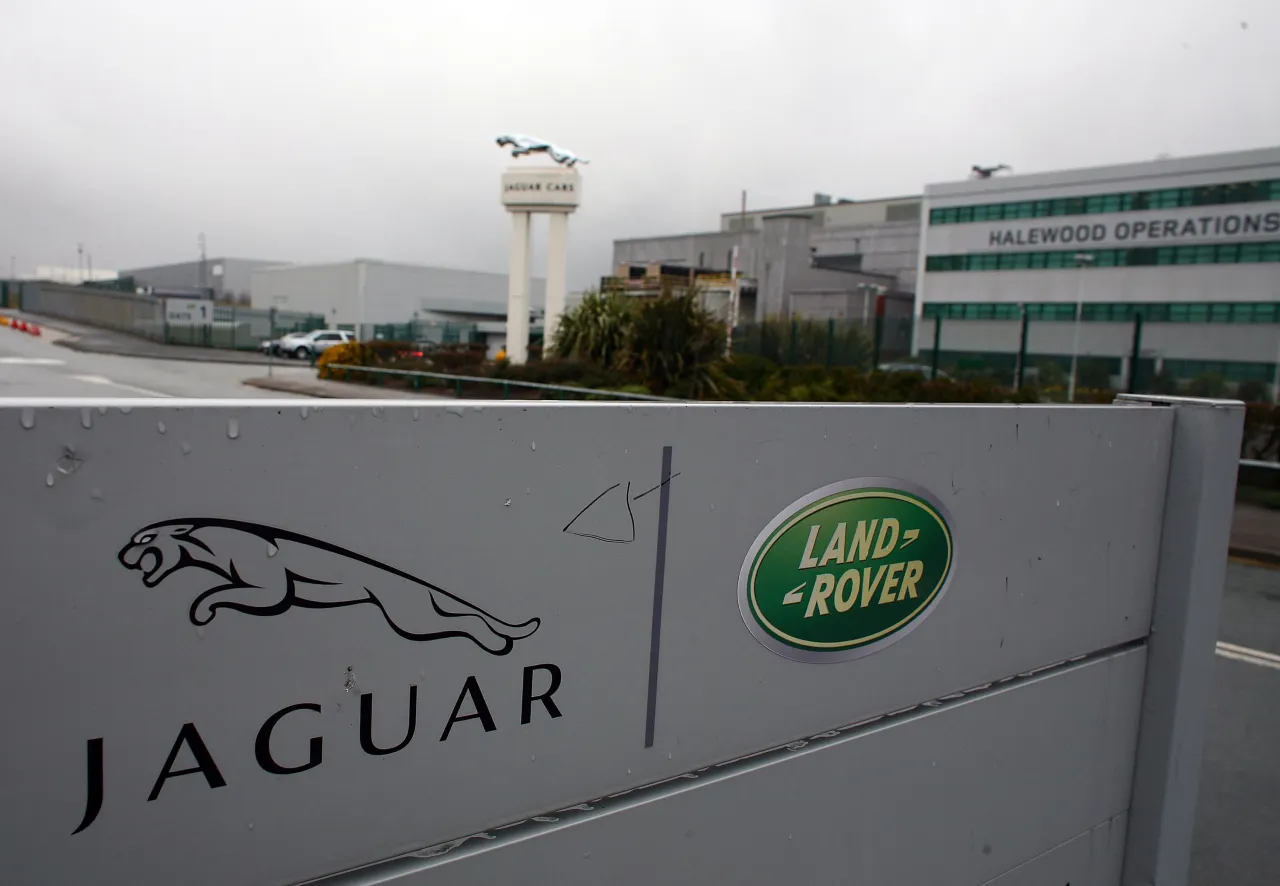
A Cyber Incident That Went Far Beyond IT Systems
The cyberattack on Jaguar Land Rover (JLR) has become one of the most consequential industrial disruptions in recent years. What initially appeared to be a targeted breach of corporate networks escalated into a large-scale operational crisis that halted production, disrupted supply chains, and ultimately triggered economic losses estimated at around $2.5 billion.
By 2026, the incident is no longer discussed as a typical cybersecurity breach. It is now widely viewed as a case study in how digital attacks can directly impact physical industry, national economies, and government intervention strategies.
How the Attack Unfolded
The intrusion reportedly occurred last year, when attackers gained access to internal systems used to coordinate manufacturing and logistics. While details remain partially classified or unconfirmed, investigators believe the breach spread across multiple layers of infrastructure rather than staying confined to a single endpoint.
Once inside, the attackers were able to disrupt core operational systems. Production lines slowed and eventually stopped, not because physical factories were damaged, but because digital coordination systems became unreliable or unusable.
Modern automotive manufacturing depends heavily on synchronized software systems—inventory tracking, robotics control, supplier logistics, and just-in-time production planning. When those systems fail, the entire production ecosystem collapses quickly.
The Ripple Effect Across the Economy
The shutdown did not remain an isolated corporate issue. Jaguar Land Rover is one of the largest employers in the United Kingdom and a critical node in the European automotive supply chain.
As production halted:
- Suppliers were forced to pause operations
- Logistics networks were disrupted
- Dealers faced inventory shortages
- Regional manufacturing economies slowed
The economic ripple effect became large enough that the UK government stepped in with a financial support package estimated at around £1.5 billion (approximately $2 billion). Broader analyses later placed total economic impact near $2.5 billion.
This marked a turning point in how governments evaluate cyber risk—not as a corporate IT issue, but as a national economic security threat.
Who Was Behind the Attack
For months after the breach, attribution remained uncertain. Cybersecurity investigations pointed in multiple directions, and speculation filled the information gap.
Later reporting, including details cited by investigators familiar with the case, suggested that a Russian-linked hacking group was involved. However, authorities have emphasized that attribution in cybercrime is rarely straightforward.
What remains unclear is the structure behind the attackers:
- Some analysts suggest a state-aligned group
- Others believe it may have been financially motivated cybercriminals
- There is also the possibility of hybrid operations with indirect state tolerance
Investigators have not publicly confirmed a single definitive origin, reflecting the complexity of modern cyber warfare attribution.
A Multi-Agency Global Investigation
The response to the breach was unusually coordinated. Multiple cybersecurity and intelligence organizations became involved, including national agencies and private sector threat intelligence teams.
Microsoft reportedly tracked activity associated with the suspected group and provided intelligence that helped identify potential actors. At the same time, organizations such as national crime agencies, cybersecurity centers, and private firms specializing in threat detection contributed to the investigation.
In parallel, investigators discovered that more than one actor had accessed parts of JLR’s systems. Alongside the suspected primary group, a separate individual hacker—operating independently—was also found to have breached portions of the network.
This reinforced a critical reality of modern cybersecurity: large-scale systems are often under simultaneous attack from multiple unrelated threat actors.
Why the Attack Was So Damaging
The severity of the JLR incident did not come from data theft alone. Its impact came from operational paralysis.
Modern automotive production depends on:
- Continuous software coordination
- Real-time supplier communication
- Automated manufacturing systems
- Integrated logistics platforms
When these systems are disrupted, production cannot simply switch to manual mode. Factories designed for precision automation lose efficiency or stop entirely.
This is why the attack caused months of disruption rather than a short-term outage.
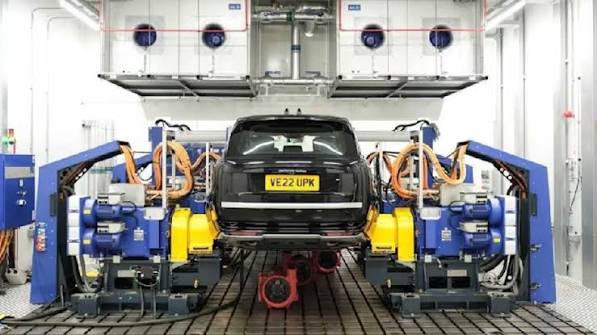
What Changed After 2025–2026 Cybersecurity Shifts
By 2026, the JLR case has become a reference point in cybersecurity policy discussions. It reflects a broader trend: cyberattacks are increasingly targeting operational continuity rather than just data theft.
Governments and corporations have begun adjusting in several key ways:
1. Industrial systems are now treated as critical infrastructure
Manufacturing networks are being classified alongside energy grids and transportation systems.
2. Increased investment in “resilience engineering”
Companies are building fallback systems that allow partial operation even under cyberattack conditions.
3. AI-driven threat detection
Security systems increasingly rely on autonomous AI monitoring to detect abnormal behavior in real time.
4. Segmentation of factory networks
Factories are being redesigned so that no single breach can fully shut down production.
The Bigger Lesson: Cyberwar Is Economic War
The Jaguar Land Rover attack illustrates a shift that cybersecurity experts have been warning about for years: the boundary between digital attacks and real-world consequences has effectively disappeared.
A single breach did not just compromise systems—it halted factories, disrupted employment, affected government budgets, and influenced national economic stability.
In this sense, cyberattacks are no longer just crimes against companies. They are systemic shocks that can ripple through entire economies.
Final Perspective
The investigation into the JLR breach is still evolving, and full attribution remains complex. But the impact is already clear.
The incident demonstrated that:
- Industrial systems are now prime cyber targets
- Economic damage can exceed technical damage
- Recovery takes months, not days
- Cybersecurity is now a core pillar of national resilience
By 2026, the lesson is no longer theoretical. It is operational reality: in a connected industrial world, a line of malicious code can stop a factory as effectively as a physical blockade.