
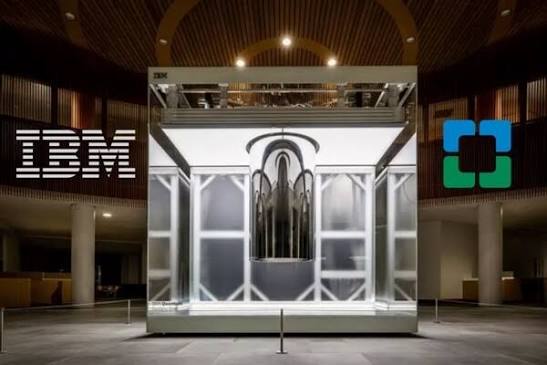
A Shift Toward Hybrid Quantum-Classical Systems
IBM has introduced a new architectural direction for computing that blends quantum processors with traditional high-performance computing (HPC) systems. Rather than treating quantum computers as standalone experimental devices, the new model integrates them directly into classical computing environments.
The goal is not to replace existing supercomputers, but to extend them. In IBM’s vision, quantum processors, CPUs, GPUs, high-speed networking, and distributed storage systems work together as a unified computational ecosystem.
This approach is designed for current workloads while remaining flexible enough to evolve as quantum hardware matures.
How Quantum-Centric Supercomputing Works
At the core of IBM’s blueprint is a layered system that connects different types of computing resources into a coordinated workflow.
Classical systems handle large-scale data processing, simulation control, and numerical computation. Quantum processors are then used for specific subproblems—particularly those involving quantum mechanics, complex optimization, or molecular simulation.
These components are linked through:
- High-speed interconnects
- Shared storage systems
- Orchestration software layers
- Hybrid execution frameworks
This structure allows tasks to move dynamically between classical and quantum resources depending on what each system does best.
The Role of Open Software and Qiskit
A key part of IBM’s strategy is software accessibility. The company emphasizes open frameworks, especially Qiskit, which allows researchers and developers to interact with quantum systems using familiar programming workflows.
Instead of requiring deep expertise in quantum hardware, users can:
- Build hybrid quantum-classical algorithms
- Simulate quantum circuits on classical systems
- Run experiments across connected HPC and quantum resources
- Integrate quantum steps into existing scientific pipelines
This reduces the barrier to entry and allows broader scientific communities to experiment with quantum computing without specialized infrastructure.
Scientific Applications Already Emerging
IBM’s quantum-centric architecture is not purely theoretical. It is already being used in early-stage scientific research across multiple institutions.
Recent collaborative projects highlight several breakthroughs:
Advanced Molecular Simulation
Researchers from IBM and partner universities have used quantum systems to analyze complex molecular structures, including the creation and verification of unusual molecular configurations that are difficult to model using classical computing alone.
Large-Scale Biological Modeling
One experiment simulated a protein structure containing hundreds of atoms, demonstrating that hybrid quantum-classical workflows can handle biologically relevant systems at a scale previously considered out of reach.
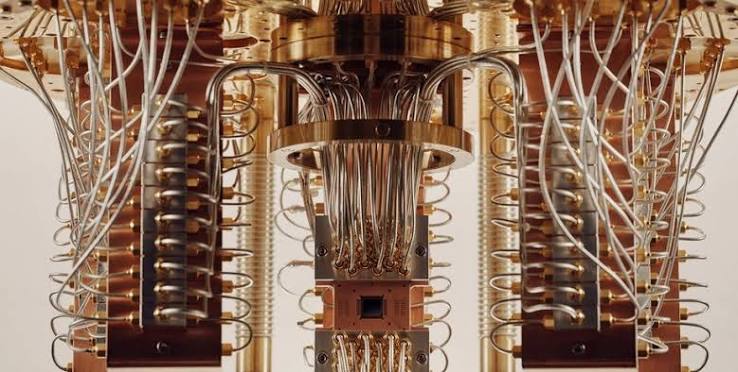
Quantum System Energy Optimization
Another study focused on identifying the lowest-energy states of engineered quantum systems, where hybrid approaches outperformed purely classical simulation techniques.
Integrated Supercomputer-Quantum Workflows
In a landmark collaboration, IBM quantum processors were connected with one of the world’s most powerful classical supercomputers, enabling tightly coupled simulation loops between quantum and classical computation.
Noise Reduction and Quantum Simulation Methods
Additional research has demonstrated new methods for reducing quantum noise and improving the accuracy of simulations involving complex many-body systems.
Why This Architecture Matters
The significance of IBM’s approach lies in how it redefines computing boundaries. Instead of viewing quantum computing as a separate future technology, IBM is embedding it into existing infrastructure.
This hybrid model matters because many of the hardest computational problems—especially in chemistry, materials science, and optimization—cannot be efficiently solved by classical systems alone.
Potential benefits include:
- More accurate molecular modeling for drug discovery
- Improved material design for energy storage and manufacturing
- Faster optimization for logistics and industrial systems
- Deeper simulation of quantum physical processes
The key idea is incremental usefulness: quantum systems don’t need to be fully scalable to be valuable—they can contribute specialized computational advantages today.
The Architecture Behind the Vision
IBM’s blueprint is structured around the concept of “quantum-centric supercomputing,” where classical and quantum systems are treated as co-equal participants in a shared computational pipeline.
Key architectural components include:
- Quantum processors handling specialized subroutines
- CPU/GPU clusters managing large-scale computation
- Orchestration layers distributing workloads dynamically
- High-speed networking enabling real-time coordination
- Shared data storage for seamless workflow continuity
This design allows developers to treat the entire system as a single computational platform rather than disconnected hardware units.
Collaboration Between Global Research Institutions
IBM’s ecosystem includes collaborations with leading universities and research centers across the world. These partnerships focus on developing algorithms, testing hardware capabilities, and validating hybrid computational results.
Institutions involved in this ecosystem include major research universities and national laboratories working on:
- Chemistry and molecular modeling
- Quantum materials research
- High-performance computing integration
- Algorithm design for hybrid systems
This distributed research model accelerates development by combining expertise from multiple scientific disciplines.
The Long-Term Direction: Scalable Quantum Integration
IBM’s long-term strategy is centered on continuous evolution rather than a single breakthrough moment. The architecture is designed to scale as quantum hardware improves, allowing new processors and algorithms to be integrated without redesigning the entire system.
Future directions include:
Deeper Workflow Automation
More intelligent orchestration systems will automatically determine when to use quantum vs classical resources.
Expanded Quantum Hardware Integration
Larger and more stable quantum processors will be added into HPC environments as they become available.
Advanced Hybrid Algorithms
New computational methods will be developed specifically for quantum-classical collaboration.
Broader Scientific Adoption
More industries beyond academia—such as pharmaceuticals, energy, and finance—are expected to adopt hybrid quantum computing workflows.
Key Takeaway
IBM’s quantum-centric supercomputing blueprint represents a transition point in computing architecture. Rather than treating quantum computing as a distant replacement for classical systems, it positions quantum processors as specialized accelerators within a broader hybrid ecosystem.
The result is a new model of computation where classical and quantum systems work together, not in competition, to tackle problems that neither could solve efficiently alone.
By integrating hardware, software, and scientific workflows into a unified system, IBM is laying the groundwork for what may become the next generation of high-performance computing—one that evolves continuously rather than arriving all at once.